
When it comes to AI in schools and law firms, fear often comes before understanding. In a recent episode of X-raised, host Myles spoke with Laina Chan, award-winning barrister and CEO of MiAI Law, and Tim Lloyd, principal of Plumpton High School.
Together, they explored one of the biggest questions facing both educators and professionals: is AI making us lazy, or is it helping us think more deeply?
Laina didn’t hesitate to address what many in law are thinking. “The more successful some lawyers are, the more resistant they seem to be to the idea that AI might help them,” she said. Even Australia’s Chief Justice has expressed concern about AI’s growing influence in legal practice. But Laina believes the fear of being replaced is misplaced. “AI isn’t here to replace lawyers,” she explained. “It’s here to elevate them.”
Her company, MiAI Law, does exactly that. Built from first principles, the platform uses guided algorithms to handle the heavy lifting of legal research. What once took two or three days now takes minutes, without sacrificing rigor. “The technology isn’t about shortcuts,” Laina said. “It’s about freeing lawyers to focus on strategy and higher order thinking.”
Tim agreed. “The right tool reduces workload and enables a higher level output,” he noted. “AI doesn’t replace critical thought; it gives us more time for it.” As an educator, he sees AI as a teaching ally rather than a threat. It can personalize feedback, help students research better, and open new ways to explore subjects.
Both guests were clear: the danger isn’t AI, it’s complacency. Laina shared a real world cautionary tale of a senior counsel who submitted AI generated citations without verifying them. “That kind of sloppiness has no place in law,” she said. Tim echoed that message for parents and teachers. “Guide students to question, verify, and think critically. That’s how learning and integrity survive automation.”
The discussion soon turned to balance. Tim emphasized that education and success aren’t only about intellect. “Parents shouldn’t fear AI,” he said. “If used responsibly, it helps students build stronger skills and healthier routines.” A holistic life, he argued, is one where students combine intellectual, physical, emotional, and social well-being.
When asked what skills will separate those who thrive with AI from those who struggle, both Laina and Tim agreed: critical thinking, adaptability, creativity, and ethical awareness. “The ones who thrive will use AI as a complement, not a crutch,” Tim said.
Laina took the idea further. “Most AI tools today are just mimicking patterns,” she said. “They’re not reasoning from first principles or creating new knowledge. There’s no superintelligence yet.” What sets MiAI Law apart is its transparency, every result is evidence backed and fully guided by legal reasoning. “Our system doesn’t just fetch information,” she said. “It reasons through it.”
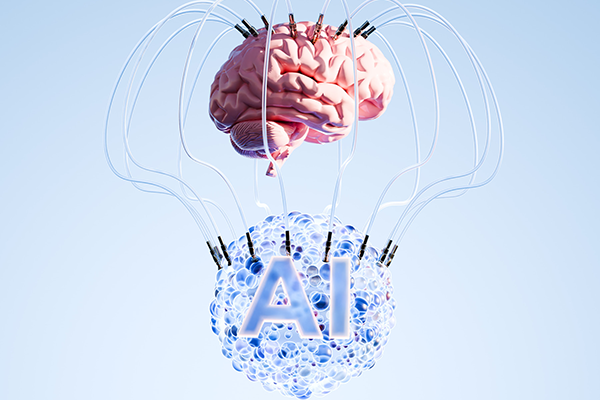
Their shared conclusion was simple but powerful: AI isn’t a replacement for human intelligence, it’s a reflection of it. In both law and education, success will belong to those who can harness technology without losing the qualities that make us human, judgment, creativity, and empathy.
As Laina put it, “The future of AI isn’t about competing with machines. It’s about sharpening what makes us human.”
This conversation is a reminder that progress isn’t about replacing effort, it’s about refining it.
To explore MiAI Law’s approach to responsible, transparent legal research, visit www.miai.law.