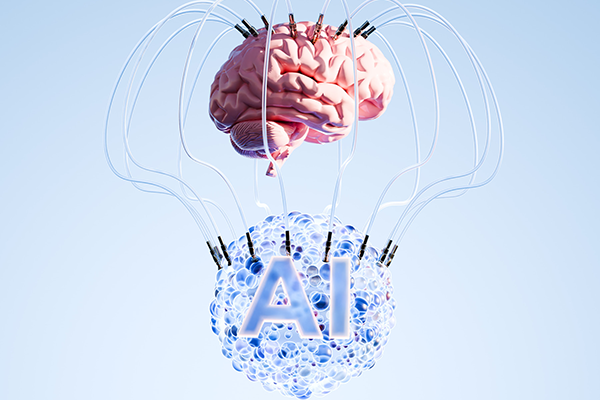

In a global environment where computer systems can deliver answers instantly, the question facing educators and lawyers is no longer whether to deploy AI, but how to prepare individuals for a future where resilience, critical thinking, and compassion remain uniquely human skills that cannot be replicated.
On a recent episode of X Raise, Tim Lloyd, principal of Plumpton High School, and Laina Chan, barrister and CEO of MiAI Law, discussed the future of education and technology as key drivers in shaping tomorrow’s leaders. Both agreed that the challenge is not about resisting AI, but about complementing it with the distinctly human strengths that fuel growth and innovation.
Tim Lloyd described his school as a living laboratory for future-ready education, emphasizing the importance of developing the “whole child” across five domains: emotional, cognitive, social, physical, and spiritual well-being. Mental health, he noted, is particularly urgent, with recent data showing it now accounts for 45% of the disease burden among people aged 10 to 24. For Lloyd, technology cannot replace the human role in supporting well-being, but it can play a vital role in reinforcing it.
Resilience, he stressed, is a cornerstone of success. Drawing on psychologist Michael Horton’s resilience programs for teens, Lloyd highlighted the importance of teaching young people how to recover from setbacks. Laina Chan echoed this, sharing how personal failures, such as her first driving test, became invaluable lessons in grit. “AI can’t teach you resilience,” she remarked, “but life can.”
Both speakers also underscored the necessity of critical thinking. While AI can provide quick answers, it is prone to hallucinations and inaccuracies. Students, they argued, must be trained to ask: Does this make sense? Is it supported by evidence? What assumptions underlie this answer? What other perspectives exist? Such questioning transforms passive information consumption into active problem-solving.
To foster this, Plumpton High uses New South Wales Edu Chat, an AI platform aligned with the state curriculum. Unlike commercial chatbots, Edu Chat does not provide direct answers. Instead, it presents research prompts, structured guidance, and instant feedback. For example, students can submit a draft paragraph and receive targeted suggestions for improvement without being handed a completed response. This method promotes reflection, higher-order thinking, and self-directed learning while conserving time and redu…
The platform also emphasizes question design, teaching students how to frame prompts that uncover deeper insights. This skill mirrors professional practice: just as lawyers must interrogate AI-generated legal arguments, students must question AI outputs in their studies. Chan linked this directly to her vision at MiAI Law, which applies first-principles reasoning to ensure AI produces transparent and ethical legal research.
Authenticity in student work remains a challenge, however. Lloyd noted that teachers often recognize when submissions do not reflect a student’s own voice. New assessment methods, such as reflections, annotations, oral explanations, and role-play exercises, help ensure that students demonstrate not only their final answers but also the thinking process behind them.